
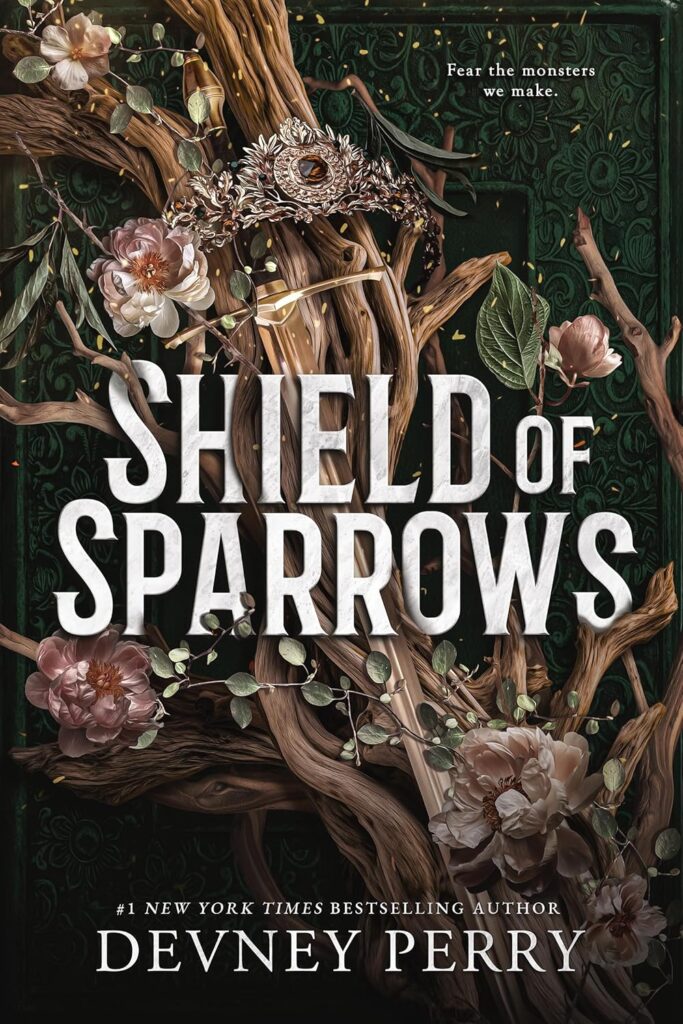
Overall, three stars.
Hook, four stars.
“What if I jumped?” opens on an immediate internal crisis—a woman balanced between oblivion and duty before we even know her name. The question returns twice, but the chapter’s real hook arrives with the Guardian: the shift from private suicidal ideation to a high-stakes political collision involving a man who destroyed Banner’s family creates a dual-layer tension the reader cannot set down. We need to know if she will jump, and we need to know what happens when her fiancé is forced to stand across a room from his brother’s killer.
Writing Style, three stars.
The prose names colors throughout without describing them. The ocean is “ocean blue,” the bay is “brilliant aquamarine,” the sails are “forest green”—labels attached to nouns, not rendered sensations. The sensory inventory of the cliffside fares no better: salt air, food, and spices from the market are categories named and dropped, stage directions for a scene that is never actually painted.
Odessa has almost no physical presence. We know she has unruly dyed hair and wears a gray dress, but her height, face, and build are absent. Banner is more grounded—combed light-brown hair, amber-flecked eyes, a teal coat with gold buttons—but the narrator herself remains a voice without a shape. Character traits throughout are stated rather than earned: Banner “loathed the Guardian,” Mae “wasn’t kind or grateful,” Odessa was usually late.
Standout Passage.
The moment Odessa’s hair escapes its braid and she tastes the bitter tang of Margot’s brown dye on her tongue. It is a small, involuntary intrusion—sensory rather than dramatic—and it carries the specific texture of a life managed by someone else’s preferences more precisely than any of the chapter’s explicit statements about her situation do.