
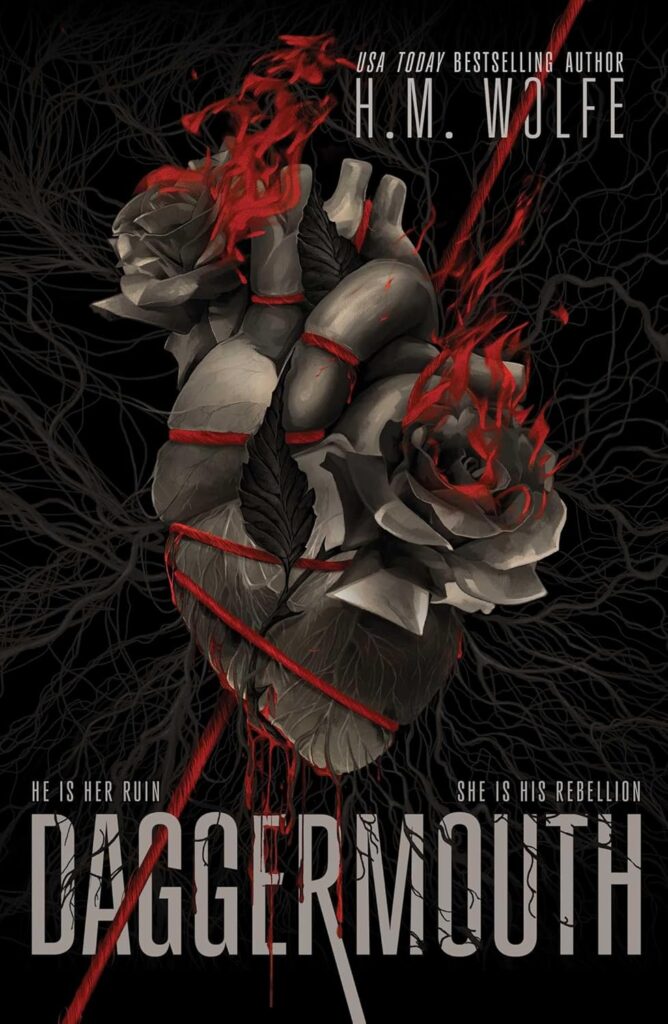
Overall, four stars.
Hook, five stars.
The hook is the precarious duality of Greyson’s existence: he is a high-ranking official and the son of a dictator who is secretly supplying the very rebels he is forced to execute. The tension is forged in the “unresolved situation” of his public role versus his private rebellion. When he hesitates during a live broadcast—a moment of humanity caught on camera—the stakes become immediate and visceral. The reader is propelled forward by the looming threat of discovery; every interaction with his father is a minefield where one slip of the tongue or a lapse in composure could end his double life. It isn’t just a story about a dystopian city; it’s a high-stakes game of “how long can he hide?”
Writing Style, three stars.
The prose contains moments of striking, evocative imagery, such as describing the masked elite as “deadly flowers soaking in a poisonous sun.” This paints a vivid picture of the atmosphere and the grotesque nature of the regime. However, the writing fails at sensory depth; there is no specific, layered exploration of scent (e.g., the chemical tang of the plants or the metallic tang of blood), which limits the score. Additionally, some character internalities are “told” rather than “shown”—such as the explicit statement that he feels “no guilt or shame,” followed by a description of his feelings as “cold.” While these moments are polished, they lean on declaration rather than letting the reader feel the weight of his inner conflict through physical reaction alone.
Standout Passage.
The scene where the father questions Greyson about his hesitation during the broadcast—it perfectly weaponizes the tension between the protagonist’s internal morality and his external requirement for “absolute” ruthlessness.