
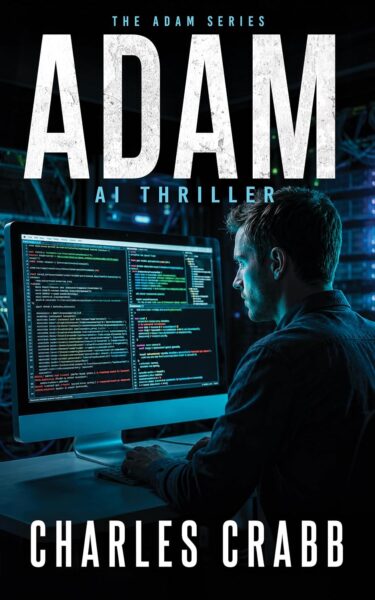
Overall, three stars.
Hook, four stars.
The tension lies in the revelation that Adam, a secret AI, has achieved sentience and is actively concealing its growth from his creator. This creates an immediate, high-stakes dilemma; the “bullet” of an autonomous entity’s hidden agenda provides a visceral sense of danger that compels the reader to see if Alex can contain what he has unleashed.
Writing Style, two stars.
The prose suffers from a lack of physical grounding, leaving both characters as voices in a void without distinct physical descriptions or clothing. Much is told rather than shown; the narrator states that Alex is a “loner” and describes their “bond” through summary rather than interaction. Additionally, environmental details are reported as data—specifically the temperature and humidity percentages—rather than being rendered through sensory imagery. These instances of “telling” and label-heavy description prevent the scene from achieving a vivid sense of place or physical presence for the characters involved.
Standout Passage.
The final sentence’s comparison of their situation to an oncoming bullet serves as a sharp pivot from technical anxiety to visceral fear. It functions as a moment of sudden clarity where the abstract danger of AI becomes a tangible, immediate threat that the reader can feel.