
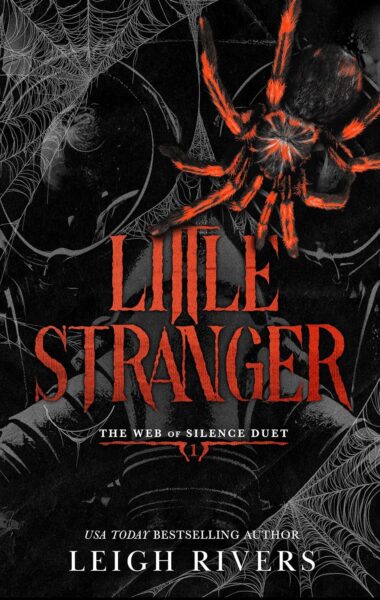
Overall, three stars.
Hook, four stars.
The tension lies in the immediate communication barrier between two traumatized children who cannot speak verbally. Because Malachi’s silence is a physical wall, every gesture—a tug on a wrist or a sign in a bathroom—becomes high-stakes. We are left wondering how these two “rescued” souls will navigate their shared trauma when they literally lack the words to describe it, creating an urgent need to see them bond.
Writing Style, three stars.
The prose frequently favors labels over renderings. Describing a former home as an “evil place” or Malachi’s eyes as “scary” tells the reader how to feel but fails to paint a vivid image of the environment or his expression. While the comparison of Malachi to a “human tower” is a striking, evocative simile that effectively establishes scale and safety, much of the sensory world remains flat. Notably, the scent of “strawberry” is a bare noun; it provides no olfactory texture, functioning as a stage direction rather than immersive prose.
Standout Passage.
The comparison of Malachi to the “human tower” who took her from a burning house. This image captures the scale of his presence and the visceral memory of trauma in one stroke, transforming him into a symbol of safety and survival without requiring a single line of heavy-handed exposition.