
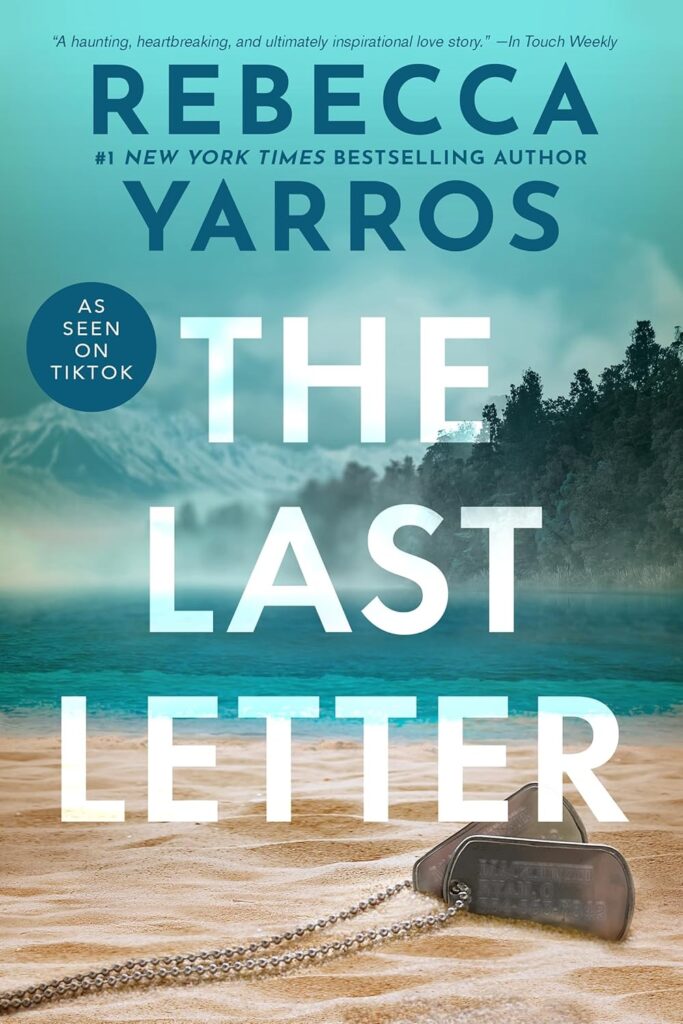
Overall, three stars.
Hook, four stars.
The hook lies in the jarring, cinematic juxtaposition between two disparate worlds: the intimate, vulnerable interior of Ella’s letter and the gritty, high-stakes reality of Beckett’s military deployment. By beginning with a “Dear Chaos” letter that feels domestic and warm—complete with peanut butter cookies—the reader is primed for a story of connection. When we pivot to Beckett, the stakes are immediately elevated by the visceral cost of his life (the mangled limb of a comrade, the death of the “New Kid”). The unresolved tension lies in the collision of these two lives: how can a man who has intentionally stripped away all attachments survive the vulnerability of reaching out to a woman he doesn’t know?
Writing Style, three stars.
The prose is functional but fails several literary benchmarks, specifically regarding sensory depth and “showing” versus “telling.” The text frequently falls into the trap of telling. For example, instead of showing us why Ella is “strong” or why Beckett feels “isolated,” the narrative states these traits directly (“I’m just too-lazy to rewrite… I didn’t form attachments because I didn’t want to”). These are internal labels rather than external manifestations.
The scent of the environment is limited to generic markers (sand, peanut butter), failing to provide the layered, evocative imagery required for more stars. Furthermore, while both characters have distinct voices, their physical presence is thin; Beckett’s appearance is largely obscured by his role and uniform, and Ella exists primarily as a voice in a letter rather than a physically rendered person. The “color” in the prose—such as the “flash of red against pristine blue”—is a start, but it isn’t consistently applied to build a tactile world.
Standout Passage.
The moment Beckett acknowledges his internal conflict: “But to be connected to another human in a way that wasn’t reserved for the brothers I served with… The yearning that grabbed ahold of me was uncomfortable and undeniable.” It perfectly captures the friction between his survival instinct (isolation) and his human need (connection), making his decision to reply feel like a high-stakes gamble.